Understanding Pillar Page SEO
In the competitive digital landscape, creating high-quality content is essential for improving search engine visibility and attracting the right audience. Pillar page SEO is a content optimization approach that focuses on developing a comprehensive page around a broad topic and connecting it with related, more specific articles. This structure helps search engines understand the relationship between different pages while providing readers with a valuable resource.
A well-developed pillar page covers the main aspects of a subject, answers common user questions, and links to relevant supporting content. Instead of publishing disconnected blog posts, businesses can organize their website around clear topics and build stronger topical relevance.
Thatware LLP helps businesses explore strategic SEO practices that support better content organization, discoverability, and long-term organic growth.
Why Pillar Page SEO Matters for Modern Websites
Pillar pages provide a structured way to organize information and create a better user experience. When visitors find comprehensive information on a particular topic, they can explore related resources through contextual internal links.
A strong pillar page can help websites target broad search queries while supporting more specific keywords through connected articles. It also makes content planning more systematic because businesses can identify important topics, supporting questions, and information gaps before publishing.
Another benefit is improved website navigation. Readers can move between related pages without repeatedly searching for information elsewhere. This organized experience may encourage deeper engagement and help visitors understand a brand's expertise.
Although pillar pages can support SEO performance, results depend on content quality, search intent, technical health, competition, and the overall usefulness of the website.
What Is a Pillar and Cluster Content Strategy?
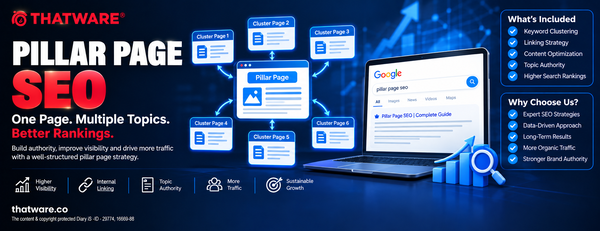
A Pillar and cluster content strategy organizes website content into a central topic page and a collection of related supporting articles. The pillar page provides a broad overview, while cluster pages examine individual subtopics in greater detail.
For example, a digital marketing agency could create a pillar page about search engine optimization. Supporting articles might cover keyword research, technical SEO, on-page optimization, link building, content optimization, and SEO reporting.
Each supporting article links to the main pillar page where relevant, and the pillar page links back to the appropriate cluster articles. These contextual connections create a logical content structure that helps users discover related information.
This approach also supports a more focused editorial plan. Instead of choosing blog topics randomly, marketers can build content around a central subject and address the different questions their audience may have.
How to Choose the Right Pillar Page Topic
Selecting the right topic is the first step toward creating an effective pillar page. Businesses should focus on subjects that align with their services, audience interests, and broader marketing objectives.
Keyword research can help identify topics with meaningful search demand and opportunities to provide useful information. However, search volume should not be the only consideration. A topic must also be relevant to the business and broad enough to support multiple related subtopics.
Search intent is equally important. Marketers should understand whether users want educational information, comparisons, practical instructions, or solutions to a specific problem. The pillar page should address the main intent while guiding readers toward more detailed resources.
Thatware LLP can use these principles to help businesses develop content plans that connect relevant search queries with useful website resources.
Essential Elements of an Effective Pillar Page
Comprehensive and Helpful Content
An effective pillar page explains the main topic clearly and covers its important subtopics. The goal is not to produce the longest possible article but to provide enough detail for readers to understand the subject and identify the next steps.
Content should be original, accurate, readable, and organized around the questions users actually ask. Relevant examples, practical explanations, and actionable recommendations can make the page more valuable.
Clear Heading Structure
A logical heading hierarchy helps readers navigate the page and understand how information is organized. The main heading should communicate the central topic, while subheadings introduce important concepts and related questions.
Short paragraphs, descriptive headings, and meaningful transitions improve readability. A table of contents can also help visitors move directly to the sections they need.
Strategic Internal Linking
Internal links connect the pillar page with supporting articles and other relevant website resources. Each link should have a clear purpose and use descriptive anchor text that explains what readers can expect from the destination page.
Avoid adding links simply to increase their number. Relevant links that help users explore a subject are more valuable than excessive or repetitive linking.
Search Intent and On-Page Optimization
Pillar pages should use the primary keyword naturally in appropriate locations, including the title, main heading, introduction, and relevant sections. Related terms can be incorporated where they fit the subject.
Meta titles, meta descriptions, image alt text, and URL structure should also be optimized where appropriate. Keyword stuffing should be avoided because it reduces readability and does not guarantee better rankings.
Steps to Build a Successful Pillar and Cluster Content Strategy
Conduct Topic and Keyword Research
Start by identifying the core topics relevant to your audience. Use keyword research and search result analysis to discover related queries, common questions, and potential supporting article ideas.
Group keywords according to their meaning and search intent rather than creating a separate page for every minor variation.
Create a Detailed Content Map
Develop a clear relationship between the main pillar page and each supporting article. Decide which information belongs on the pillar page and which subjects deserve dedicated cluster pages.
A content map helps prevent unnecessary duplication and ensures that every article serves a specific purpose within the overall strategy.
Publish Useful Supporting Articles
Each cluster article should provide focused information about one subtopic. It should answer the user's question in sufficient detail and link naturally to the main pillar page.
Supporting content should offer independent value rather than repeating the same information across multiple URLs.
Optimize and Connect the Pages
Review the content for readability, relevant internal links, appropriate headings, and accurate information. Check that important pages are accessible to search engines and that internal links point to the correct URLs.
A consistent linking structure helps visitors navigate the website and gives search engines additional context about the relationship between pages.
Monitor Performance and Update Content
After publishing, track organic traffic, keyword visibility, click-through rates, engagement, and conversions where relevant. Search Console and website analytics tools can help identify pages that perform well or require improvement.
Update outdated information, improve weak sections, and add new cluster articles when audience needs or industry developments justify them.
Common Mistakes to Avoid in Pillar Page SEO
One common mistake is creating a broad page without providing meaningful depth. A pillar page should answer important questions and direct readers to genuinely useful supporting resources.
Another issue is publishing multiple pages that target nearly identical search intent. This can create unnecessary overlap and make it harder to establish a clear purpose for each URL.
Poor internal linking, irrelevant cluster topics, keyword stuffing, and outdated information can also weaken the overall content structure. Businesses should avoid focusing exclusively on search engines while neglecting the people who will actually use the content.
A successful strategy prioritizes relevance, clarity, and helpfulness while maintaining a technically accessible website.
How Thatware LLP Can Support Your Content Strategy
By combining topic research, content optimization, technical SEO, and performance monitoring, businesses can build a website that is easier to navigate and more useful to their audience. Thatware LLP emphasizes strategic digital marketing practices designed to help businesses strengthen their online presence. A structured content approach can support keyword targeting, internal linking, content planning, and the development of relevant resources for different stages of the customer journey.
Pillar pages should be treated as evolving resources rather than one-time publishing projects. Regular evaluation helps keep information relevant and reveals opportunities to expand supporting content as customer needs change.
Conclusion
Pillar page SEO provides a practical framework for organizing website content around important topics. When combined with a thoughtful Pillar and cluster content strategy, it helps businesses connect comprehensive guides with focused supporting articles, improve content discovery, and create a more organized user experience.
The key to success is developing useful information, maintaining relevant internal links, understanding search intent, and reviewing performance consistently. With a structured approach, Thatware LLP can help businesses work toward stronger content organization and sustainable organic search growth.