Introduction to Pillar Page SEO
In today's competitive digital landscape, creating high-quality content is essential for improving search engine rankings and attracting the right audience. However, publishing individual blog posts without a clear content strategy may not deliver the desired SEO results. Businesses need a structured approach that connects related content and helps search engines understand their website's expertise. This is where Pillar page SEO becomes important.
Pillar page SEO is a content optimization strategy that focuses on creating a comprehensive page covering a broad subject and connecting it to related articles through internal links. This approach helps users explore a topic in detail while allowing search engines to understand the relationship between different pages.
When combined with Topic clusters SEO, pillar pages can help businesses strengthen topical authority, improve website navigation, and build a more organized content structure. Thatware LLP helps businesses develop strategic SEO approaches that support long-term organic visibility and sustainable digital growth.
Understanding the Concept of Pillar Page SEO
Pillar page SEO involves creating a central page that provides an extensive overview of a particular subject. Instead of focusing on a narrow keyword, the page addresses multiple related questions and subtopics that users may search for.
For example, a digital marketing website might create a pillar page about search engine optimization. This page could cover keyword research, technical SEO, content optimization, link building, and local SEO. Each subtopic could then link to a dedicated article offering more detailed information.
The main purpose of a pillar page is to provide a useful starting point for readers who want to understand a subject comprehensively. It also establishes a logical relationship between the main page and supporting content.
A well-optimized pillar page should include relevant keywords, descriptive headings, useful internal links, and clear explanations. These elements help improve usability while supporting a website's broader content strategy.
Why Pillar Page SEO Matters for Businesses
Improving Topical Authority
Search engines aim to deliver relevant and helpful information to users. Publishing comprehensive content around a particular subject can help demonstrate a website's experience and coverage of that topic.
Pillar pages supported by relevant articles allow businesses to explore important subjects from different perspectives. This organized approach can strengthen topical coverage and help search engines understand the website's focus.
However, topical authority is not determined by the number of articles alone. Content quality, relevance, originality, and usefulness remain essential.
Enhancing Website Navigation
A website with disconnected articles can make it difficult for visitors to find related information. Pillar page SEO addresses this problem by connecting the main topic with supporting resources.
Readers can move from a general overview to specific explanations without repeatedly searching for information. Better navigation can improve the overall user experience and help visitors discover additional relevant content.
Supporting Organic Search Visibility
A comprehensive pillar page can target a primary keyword while addressing related search terms and user questions. Supporting articles can target more specific queries and direct readers toward the central resource.
This structure creates opportunities to attract visitors at different stages of their search journey. Although rankings are never guaranteed, a well-planned content structure can support broader organic search visibility.
What Is Topic Clusters SEO?
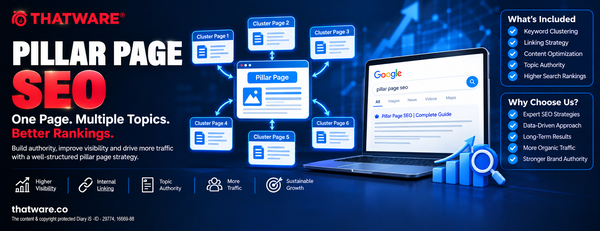
The pillar page provides a broad overview of the main topic. Cluster content explores individual subtopics in greater detail. Internal links connect these resources so readers and search engines can navigate the content logically. Topic clusters SEO is a content strategy that organizes related web pages around a central subject. It typically consists of three important components: a pillar page, supporting cluster content, and internal links connecting the pages.
For example, a website targeting digital marketing might build a content cluster around SEO services. The pillar page could explain the fundamentals of SEO, while supporting articles cover keyword research, on-page optimization, technical SEO, and content marketing.
This approach helps businesses create a connected content ecosystem rather than publishing isolated blog posts.
The Relationship Between Pillar Page SEO and Topic Clusters SEO
Pillar page SEO and Topic clusters SEO work together to create a structured content strategy. The pillar page acts as the central resource, while cluster articles provide detailed information about related subjects.
When these pages are connected through meaningful internal links, users can easily move between general information and specialized content.
For instance, a pillar page about content marketing could link to supporting articles about content calendars, keyword research, blog writing, and content distribution. Each supporting article could link back to the main pillar page when appropriate.
This structure helps clarify the relationship between pages and makes content easier to explore. It can also help search engines discover relevant URLs and understand how different resources relate to one another.
Thatware LLP can help businesses approach content planning strategically by identifying relevant subjects, organizing related keywords, and developing a structured internal linking strategy.
How to Create an Effective Pillar Page SEO Strategy
Choose a Relevant Core Topic
The first step is selecting a broad topic that aligns with your business goals, audience interests, and services. The topic should offer enough depth to support multiple related articles while remaining relevant to your website.
Keyword research tools, search suggestions, competitor analysis, and customer questions can help identify potential topics.
For example, an SEO agency might choose enterprise SEO, technical SEO, or content marketing as a core subject, depending on its expertise and target audience.
Conduct Comprehensive Keyword Research
Keyword research helps identify the primary keyword and the related queries users search for. Select a primary keyword for the pillar page and identify secondary keywords for supporting articles.
For example, a pillar page targeting Pillar page SEO could cover related concepts such as content architecture, internal linking, and content optimization. Separate supporting articles could explore each subject in greater detail.
Avoid forcing keywords into the content. Instead, incorporate them naturally wherever they improve clarity and relevance.
Develop High-Quality Supporting Content
Supporting articles should answer specific questions and provide useful information beyond what appears in the pillar page.
Each article should have a clear purpose and target a distinct search intent where possible. Avoid creating multiple pages that repeat the same information without providing additional value.
Consistent quality across the entire content cluster is more valuable than publishing a large number of superficial articles.
Build a Logical Internal Linking Structure
Internal links are essential for connecting pillar pages and cluster content. Link relevant supporting articles to the main pillar page and connect related articles where doing so benefits readers.
Use descriptive anchor text that explains what visitors can expect after clicking a link. Ensure that important pages are accessible through your website's navigation and internal linking structure.
A clear linking strategy helps users discover related information and supports search engine crawling.
Optimize the Pillar Page for User Experience
A successful pillar page should be easy to read, navigate, and understand. Organize the content using descriptive headings, short paragraphs, relevant examples, and a logical sequence.
Consider adding a table of contents for longer pages. Optimize page speed, ensure mobile responsiveness, and use descriptive title tags and meta descriptions.
The goal is to make the page useful for visitors while maintaining strong SEO fundamentals.
Common Mistakes to Avoid in Pillar Page SEO
One common mistake is creating a pillar page that is long but lacks meaningful information. Content length alone does not guarantee better rankings. Every section should provide value and address a relevant user need.
Another mistake is publishing supporting articles without linking them to the main page. Without a clear structure, the content cluster may not provide the intended navigation and organizational benefits.
Keyword cannibalization can also become a concern when multiple pages target nearly identical search intent. Businesses should assign clear purposes to their pages and consolidate overlapping content when appropriate.
Finally, neglecting content updates can reduce usefulness over time. Review important pillar pages periodically to correct outdated information, improve internal links, and address new questions from your audience.
Measuring the Success of Pillar Page SEO
Tracking performance helps businesses understand whether their content strategy is delivering meaningful results. Google Search Console can provide insights into impressions, clicks, click-through rates, and keyword performance.
Website analytics tools can help measure organic traffic, engagement, and conversions. Businesses should also monitor the performance of supporting articles and examine how visitors navigate between related pages.
Compare performance over time rather than expecting immediate results. Search visibility depends on multiple factors, including competition, technical health, content quality, and website authority.
Regular analysis allows businesses to identify content gaps, improve underperforming pages, and prioritize future optimization efforts.
How Thatware LLP Can Support Your SEO Growth
Building an effective content architecture requires more than publishing articles around a few keywords. It involves research, planning, content development, technical optimization, and continuous performance monitoring. Thatware LLP can help businesses develop structured SEO strategies that connect relevant content, improve internal linking, and support organic search growth. By integrating Pillar page SEO with Topic clusters SEO, businesses can create a more organized website that serves users and supports their long-term search visibility goals.
A well-planned content strategy can also help businesses answer customer questions, demonstrate subject expertise, and guide visitors toward relevant services or solutions.
Conclusion
Pillar page SEO is an effective approach to organizing website content around important subjects. By combining comprehensive pillar pages with relevant supporting articles, businesses can create a clear content structure that improves navigation and strengthens topical coverage.
Topic clusters SEO complements this strategy by connecting related content through meaningful internal links and clearly defined page purposes.
For businesses looking to improve their digital presence, a structured content strategy can provide a strong foundation for long-term SEO efforts. With strategic planning and consistent optimization, Thatware LLP can help businesses build connected content experiences that serve their audiences and support sustainable organic growth.